
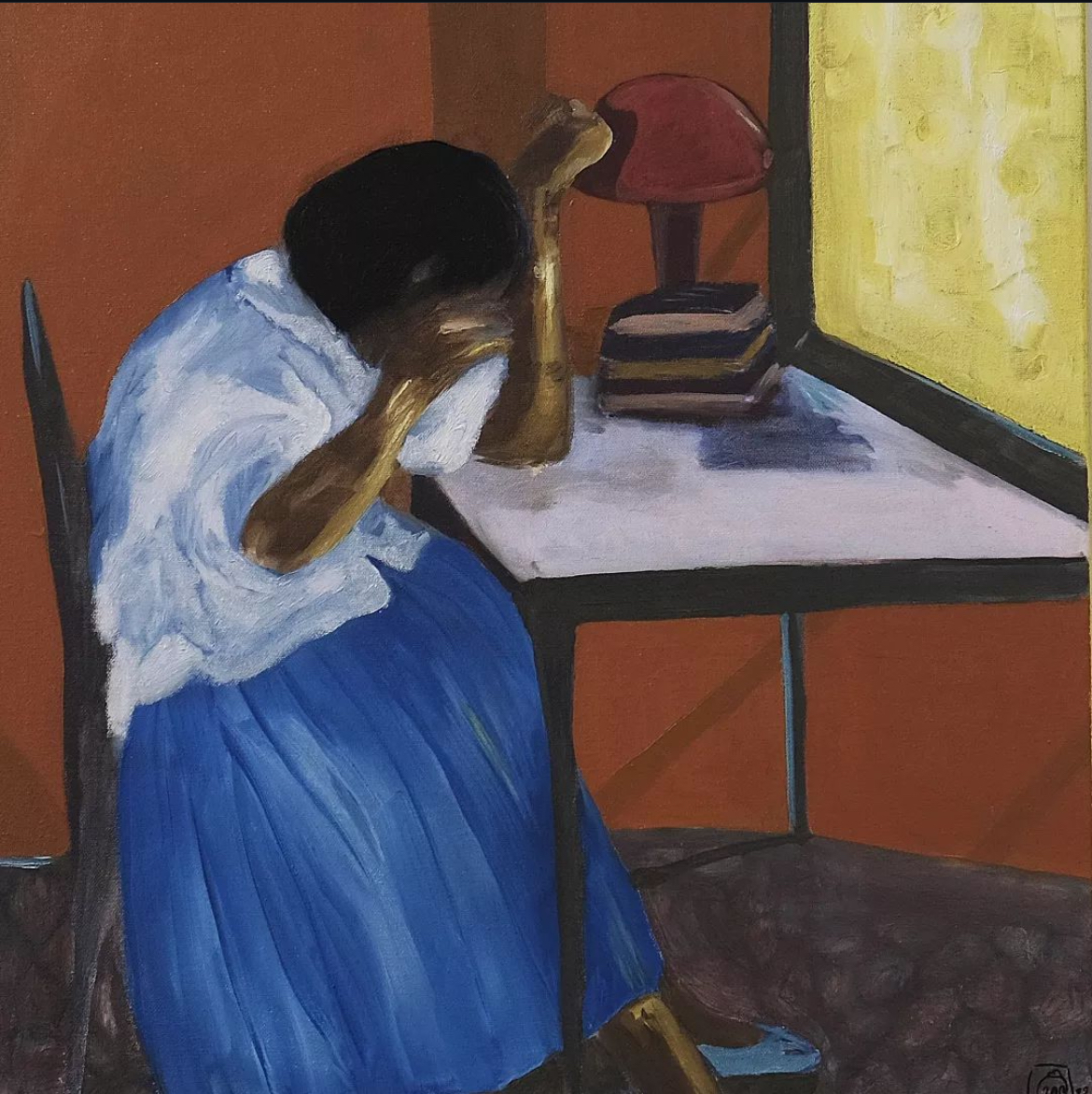
“Choosing keeping”, 50x50cm oil on Canvas, 2022.
Back in September 2022, I had the privilege of attending Barbara Evina’s first solo exhibition. In an intimate exploration of self and medium, Barbara Evina delves into the profound connections between her life experiences and her artistry, vividly portraying personal growth and cultural adaptation. Using oil as her chosen medium, she articulates a narrative that is both deeply personal and universally relatable, emphasizing the lasting impact of her works and the significance of art as a medium for self-expression and historical endurance.
How did the concept for this exhibition come about? What inspired you?
BE : The exhibition was born out of my need to express and reflect on my journey of growing up and transitioning into womanhood in Europe, particularly as a Black woman in predominantly white areas. The inspiration stems from my personal experiences and the desire to connect with others who have felt similarly. Despite the spontaneity of the project taking merely three months to come to fruition, it was an intense period of focused creation, driven by my compulsion to share and conceptualize my thoughts on canvas.
What can you tell us about the behind-the-scenes process for this project?
BE : The project was a spontaneous endeavor, fueled by my personal revelations and the urgent need to articulate my experiences. It wasn’t a long-drawn-out process but rather a concentrated effort over three months, where I found myself completely absorbed in translating my thoughts and feelings into art. The opportunity to hold a solo exhibition seemed like the perfect moment to bring these reflections to a broader audience, specifically targeting Black women who might resonate with growing up in similar socio-cultural environments.
What drove you to pursue this project?
BE : The drive came from a deep-seated desire to live freely and authentically, to make sense of my evolving identity amidst changes, and to share these insights through my art. My work aims to voice the underrepresented experiences of Black women from the countryside, challenging niche perceptions and inviting a broader dialogue about diversity within the Black female experience in Europe.
How do you view the representation of Black women in the countryside on social media?
BE : I admire the ‘Black Girl Cottagecore’ aesthetic and its growing representation on platforms like Instagram and TikTok. It’s crucial to showcase the varied experiences of Black women, acknowledging the differences and similarities in their lives across different regions. My art is an invitation to celebrate these narratives, emphasizing the importance of visibility and representation.
Is your art intended to be relatable to other Black women, or is it more a personal expression?
BE : My primary goal is to reflect the experiences and voices of Black women through my art. While my art is deeply personal, it is crafted to resonate with other Black women, allowing them to see themselves represented in the art world. I strive for universality in my themes, hoping to connect with anyone who finds aspects of their womanhood mirrored in my work.
Do you view your art as a form of therapy, a liberation practice?
BE : Absolutely. My art serves as a therapeutic outlet, allowing me to express and navigate my feelings and experiences. While I don’t actively seek to commercialize my art, the process of creating and sharing it is inherently liberating and fulfilling, offering me a sense of happiness and inner peace.
“The exhibition was born out of my need to express and reflect on my journey of growing up and transitioning into womanhood in Europe, particularly as a Black woman in predominantly white areas.”
How did the transition from creating art as therapy to showcasing it in a solo exhibition happen?
BE : The transition was organic, initiated by sharing my work on social media, which led to the opportunity to exhibit. Sharing these personal experiences felt necessary, akin to sharing stories with friends, fostering a sense of community and understanding among those who could relate.
Did you face any challenges in sharing personal experiences through your art?
BE : My approach to art is to convey ideas and emotions rather than explicit personal narratives. This abstraction allows me to maintain privacy while still expressing genuine experiences. I focus on evoking feelings and thoughts that resonate without delving into overly personal details.
How did you feel before and after the exhibition?
BE : Before the exhibition, I was nervous about the reception and the relatability of my work. However, sharing and potentially touching even a single individual’s life was profoundly rewarding. The exhibition affirmed my belief in the power of art to connect, heal, and inspire.
“My work aims to voice the underrepresented experiences of Black women from the countryside, challenging niche perceptions and inviting a broader dialogue about diversity within the Black female experience in Europe.”
Who or what inspired you for this exhibition?
BE : While this exhibition was not directly inspired by specific artists, my ongoing journey in art continuously draws from various influences, including my Cameroonian heritage and personal experiences. My work is a reflection of my identity, experiences, and the complex layers of womanhood and race.
Have you always been involved in painting?
BE : Painting has been a lifelong passion for me, intertwined with my academic and professional paths. The pandemic provided an opportunity to delve deeper into my art, driven by a sense of urgency and the transformative power of creative expression.
Are there any Cameroonian or French influences in your art?
BE : My Cameroonian heritage and upbringing play a significant role in my art, though often subconsciously. The rich cultural influences of my early years in Cameroon and the continued connection through language and family have deeply shaped my artistic voice, allowing me to navigate and embrace my dual identity.
“A Brilliant Future”, 50x70cm oil on canvas by Barbara Evina.
You became a full-time artist for a year. How was that experience, and did you feel pressure to succeed on social media?
BE : Yes, I did it for a year, but I quickly realized it wasn’t sustainable because I was constantly worried about my bills. I want people to understand that being an artist isn’t about following trends or subscribing to the hustle and grind culture. Personally, I don’t care about being “out there.” I love sharing my art on social media, but for me, it’s not about gaining viral exposure or winning anything. What matters is being in a comfortable position to create my art. I can’t paint if I’m stressed about selling pieces or making enough to pay rent.
Some people can handle that pressure, and I admire those artists on social media who manage it well. However, it’s not for me, and it doesn’t diminish my identity as an artist. I just want to be comfortable when I paint and ensure my ideas come from a genuine place, not from a desire to please others or go viral. I have a job now, and I paint when I want to, which brings me the most joy. I know some people give up if they don’t succeed online because the market is so focused there. You have to be active and have a likable personality, and some advise posting about yourself along with your art. While I occasionally post selfies, I don’t feel I should have to do it to bring more exposure to my art.
Art consumed on social media often becomes mere content. It’s concerning how an artist’s month-long effort on a piece can go viral on TikTok and be forgotten in days. This fast-paced environment forces artists to create new work constantly, which can be mentally and emotionally draining. I don’t envy that position.
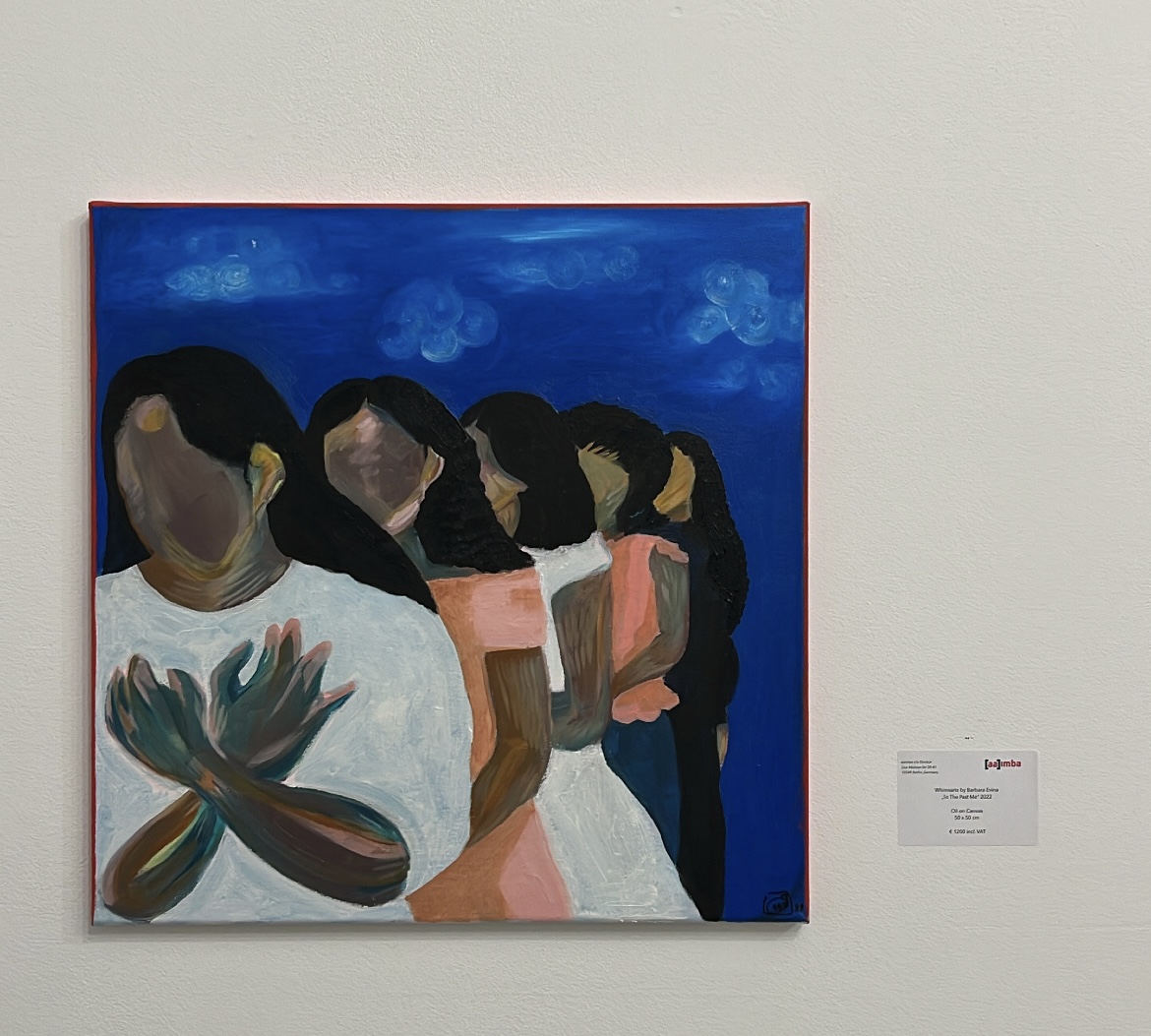
“To The Past Me” 2022, Oil on Canvas, 50×50 cm, by Barbara Evina.
You mainly paint with oil. What’s the intention behind that choice?
BE : I chose oil paints because I wanted to use something valuable and enduring. I’ve always drawn, and my mother still has bags of my childhood drawings. But back then, it didn’t feel precious. During the pandemic, I started painting with acrylics because I was scared of oils. Once I gained confidence, I switched to oils because some ideas deserve a surface that can last for hundreds of years.
I don’t mind not being popular now; I want my ideas to endure. Even if I don’t make a career out of it, I want my work to exist for a long time. Initially, I was intimidated by oil because it lasts so long. I’ve been learning about painting techniques and how to make a painting durable with vivid colors, inspired by artists like Leonardo Da Vinci. Using oil made me take my art more seriously. Now, I also use pastels for my drawings.
“I believe that anyone who creates is an artist, whether they sculpt occasionally in their garage or have regular exhibitions; it’s about the thought process and the commitment to creating regularly.”
Do you consider yourself an artist, and if not, does it even matter?
BE : I find the label “artist” fascinating. I believe anyone who creates is an artist. Whether someone sculpts occasionally in their garage or has regular exhibitions, they are an artist. Being an artist isn’t about being featured in magazines or having big exhibitions. It’s about how you see things, your thought process, and creating regularly over time. For me, that’s what defines an artist.
What are your reflections on how you spent your twenties?
BE : I’m proud of what I’ve accomplished with what I had. Despite a lot of trauma, I was motivated to move forward, to forgive those experiences for undermining me, and to ensure they didn’t hold me back. This exhibition was about letting things out and not letting past experiences prevent me from living my life to the fullest.
As you leave your twenties, what advice would you give to someone entering theirs, inspired by your art and this exhibition, particularly as a Black woman artist?
BE : We don’t focus on ourselves enough. We face hardships from every direction and often waste energy on people and things that drain us. My advice is to mind your own business (in a positive way) and focus on loving and taking care of yourself. Once you do that, the rest will follow. Creatively, don’t force it. Let inspiration guide you, but ensure you’re happy with what you create. Don’t pursue an “artistic” career out of obligation, as you’ll tire of it. Make sure your creations come from a place of authenticity and are something you’ll never be ashamed of. Looking back at this exhibition, I see my growth and evolution. I’m proud of my ideas and the thoughts I’ve shared, and that’s what matters most. Ensure that what you put out there is something you’ll be proud of now and in the future.
Barbara Evina’s exhibition is not just a showcase of art but a deeply personal exploration of identity and Black womanhood. Her work stands as a testament to the power of art as a medium for expression and connection, inviting viewers into a dialogue that transcends geographical and cultural boundaries.

Barbara Evina, the painter.

Leave a Reply